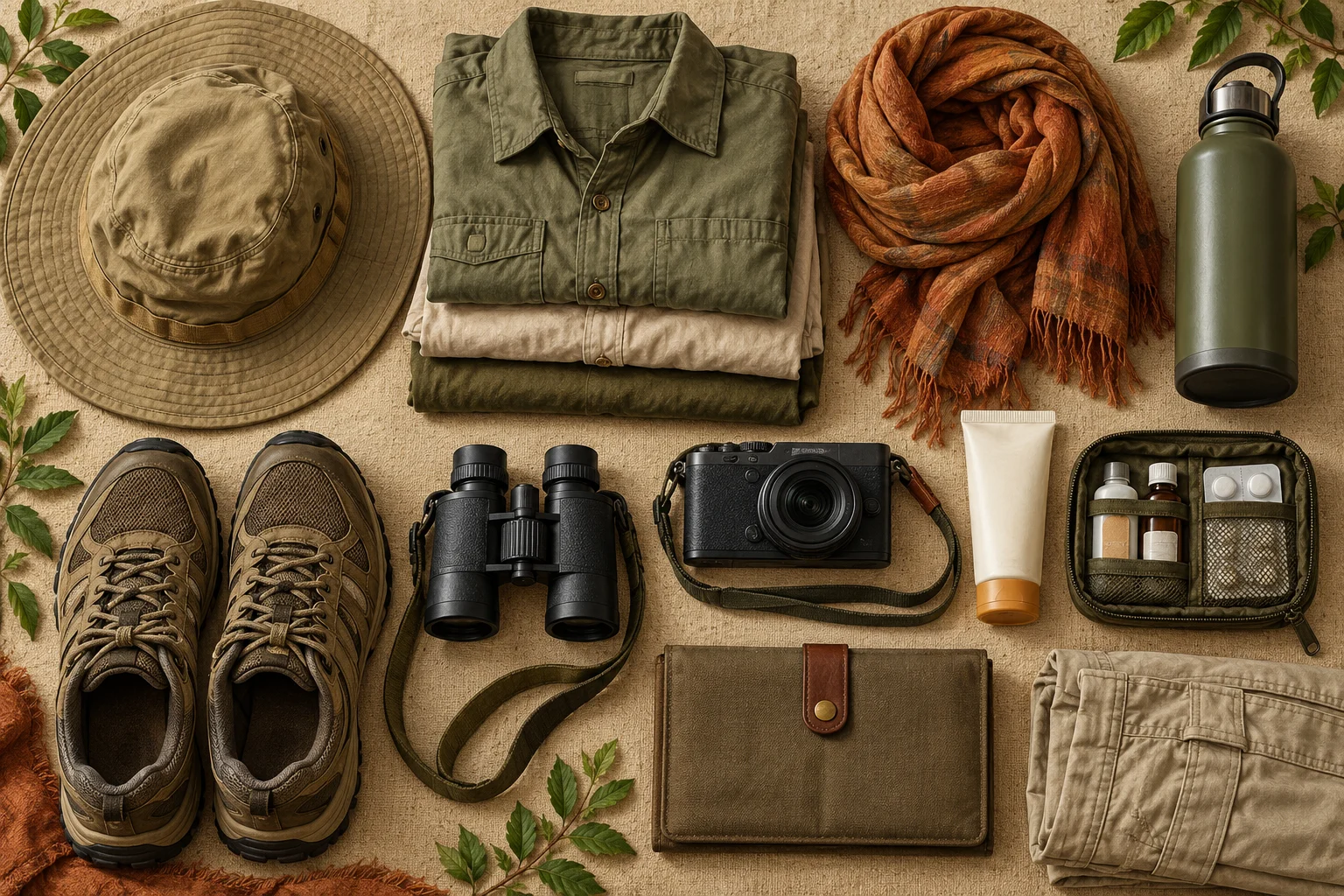
For a Kanha safari, carry the identity documents required by the current permit, wear quiet-coloured removable layers, and keep sun, dust and moving air in mind. A small, organised day bag is more useful than heavy luggage in the vehicle.
Rules can change. Check the rulebook linked by the official MP Forest portal for your travel date, especially for identity documents and restricted equipment.
The essential checklist
- Original identity document required by the permit
- Offline copy of the confirmed permit and receipt
- Personal medication in hand luggage
- Warm or breathable layers for the season
- Closed, comfortable footwear
- Hat, sunglasses and sun protection
- Reusable water bottle if permitted by the operator
- Binoculars, if you have them
- Camera, charged batteries and memory cards
- A small scarf or face covering for cold air and dust
Documents: pack these first
Traveller names and identity details should match the booking. Keep the relevant original document accessible rather than buried in a suitcase. Foreign visitors should follow the passport requirements shown in the current official rulebook.
Download the permit and important contact details for offline access. Mobile coverage and last-minute logins should not be the only way to retrieve them.
What to wear in winter
From December to February, open-vehicle mornings can be cold even when the afternoon becomes comfortable. Use layers you can remove:
- Comfortable base layer
- Warm middle layer
- Wind-resistant outer layer
- Scarf, warm cap and closed shoes
Gloves can help on the coldest starts. Avoid bringing only one oversized coat; removable layers adapt better as the temperature changes.
What to wear from March to June
Later-season travel needs breathable fabric, strong sun protection and sensible hydration. Long, lightweight sleeves and trousers provide coverage without adding bulk. A broad-brimmed hat is more useful than fashion headwear with little shade.
The hottest months are demanding. Clothing cannot replace rest, water and a realistic schedule between drives.
Colours and footwear
Choose muted greens, browns, greys or other non-flashy colours. This is a considerate choice in a wildlife setting, not a claim that a particular outfit improves sightings.
Closed walking shoes are practical for transfers and stops. Heavy trekking boots are unnecessary for a standard vehicle safari unless another part of the itinerary requires them. Avoid loose sandals that are difficult to manage in the dark.
Camera and binoculars
Bring only equipment you can handle safely in the vehicle. Charge batteries the night before, clear memory cards and switch off intrusive sounds or flashes. A soft cloth and simple dust protection help keep lenses usable.
Ask the official operator about restrictions or additional permissions for professional, commercial or unusually large equipment. Do not bring a drone; protected areas have strict controls, and any permission must come from the responsible authority.
Binoculars are valuable even without a large camera. They encourage attention to birds, movement, forest edges and distant habitat rather than only photographing a single hoped-for species.
Keep the day bag small
Useful extras include tissues, hand sanitiser, a compact reusable rubbish pouch and simple snacks only where permitted. Avoid single-use packaging when possible and carry all waste out.
Do not pack speakers, strong fragrances or anything intended to attract or feed wildlife. Follow the guide’s instructions, keep voices low and never ask a driver to crowd an animal for a photograph.
Prepare the night before
- Lay out every person’s layers and shoes.
- Put identity documents and permit together.
- Confirm the wake-up and pickup time.
- Charge devices and silence unnecessary alerts.
- Request a packed meal in advance if staying at KBK.
- Recheck the reporting gate, not only the zone name.
Read the season guide before choosing layers and the booking guide for document planning. Guests can confirm pickup and packed-meal arrangements through KBK’s safari support page.
Source note: official identity and equipment rules can change. This checklist was checked against the MP Forest portal on 25 October 2026; follow the current permit and rulebook for final requirements.